Complete Water Heater Guide — When to Repair vs. Replace
Key Takeaway:
For a 15-year-old water heater, replacing it is the best financial decision. While a broken water heater presents an urgent choice between repair and replacement, units 15 years or older have typically exceeded their 8-12 year lifespan. Continuing to repair such an aged unit often leads to wasted money on repeated fixes, significantly higher energy costs (water heating accounts for nearly 20% of your home’s energy bills), and an elevated risk of catastrophic failure. A practical rule of thumb is: if repair costs exceed 50% of a new unit’s price, or if the unit is well past its typical lifespan, replacement offers superior long-term value and peace of mind. This guide provides a framework to confidently evaluate your options.
3 Types of Water Heater
Before you can make an informed decision about repair versus replacement, you need to understand how water heaters work and how long they typically last. Your water heater’s lifespan will vary significantly depending on its type. Knowing this helps you set realistic expectations and make smarter financial decisions.
Tank-Style Water Heaters
Traditional water heaters are the most common residential option. Their tanks store and continuously heat 30 to 80 gallons of water, keeping it ready for immediate use. The system cycles on throughout the day to maintain a set temperature, even when you’re not drawing hot water. The initial cost is lower than other options, but expect to need a replacement after 8 to 12 years.
Tankless Water Heaters
Tankless water heaters heat water only when you need it, eliminating the energy waste of keeping a full tank hot around the clock. Cold water flows through the unit, where gas burners or electric coils heat it. The up-front investment runs higher than traditional tanks, but these systems can operate for up to 20 years and deliver significant energy savings. They’re ideal for homes with fluctuating demand.
Hybrid Water Heaters
Hybrid water heaters combine tank storage with heat pump technology. These units pull warmth from the surrounding air and transfer it to the water, making them highly efficient. They require more room than traditional tanks and work best with consistent ambient temperatures. Expect a lifespan of 13 to 15 years, positioning them between traditional tanks and tankless units in longevity and cost.
4 Signs Your Water Heater Needs Professional Attention
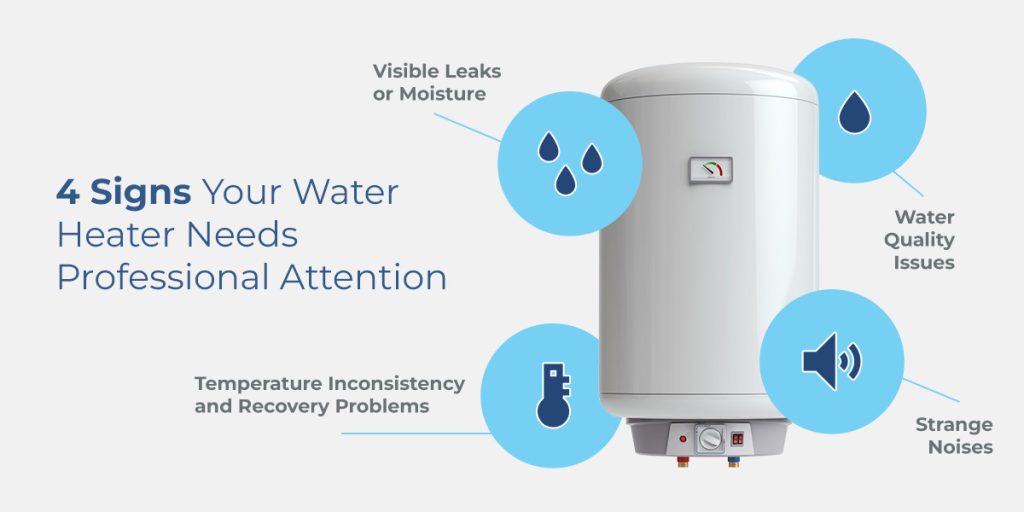
Catching problems early can mean the difference between a simple repair and an expensive emergency replacement. These are the signs you need a new water heater or, at a minimum, professional water heater repair to assess the damage.
1. Strange Noises
Loud noises coming from your water heater usually indicate a sediment buildup at the bottom of the tank. Over time, minerals in the water supply settle and harden, forcing the heating element to work harder and causing the water to boil unevenly. Flushing the tank can sometimes resolve this issue if the unit is relatively new. But once a system reaches 8 years or older, sediment has often caused irreversible damage to the tank lining, and the noise signals imminent failure.
2. Water Quality Issues
Corrosion inside the tank will impart a rusty tint or metallic taste to your hot water. It’s a definitive sign that replacement is necessary because once corrosion begins, no repair can reverse it. Ignoring the problem will increase the risk of water damage resulting from a leaky tank.
3. Temperature Inconsistency and Recovery Problems
When your water doesn’t get as hot as it used to or you run out of hot water mid-shower, you may have a failing thermostat or heating element. These are typically straightforward, affordable repairs for younger units. But when a water heater nears the end of its lifespan, fluctuating temperatures often point to declining efficiency and an approaching breakdown. In many cases, repairing an aging system only delays the inevitable, and another failure is likely to happen soon.
4. Visible Leaks or Moisture
Not all leaks signify the need for an immediate replacement. For example, leaky valves and fittings are often simple fixes. However, replacement is your only option if you see water seeping from your tank. You can’t afford to ignore a leak, especially if it’s near your living areas, where it can cause extensive property damage.
How to Decide Between Repair and Replacement:
Evaluate these three factors to understand when to repair vs. replace your water heater.
- Age is Critical: The 15-Year Water Heater Dilemma: Age is the pivotal factor in this decision. If you are considering whether or not you should repair or replace a 15-year-old water heater, the answer is to always replace it because it has outlived its lifespan, and it is almost always a wiser investment to replace it, even if the repair seems minor. That’s because continuing to patch an aging unit costs money that you could redirect toward a more efficient replacement.
- Repair cost: Compare the quoted repair cost against the price of a new unit. A $150 thermostat replacement on a 5-year-old water heater makes perfect sense, while a $600 repair on a 11-year-old tank does not. For context, water heater replacement costs vary based on system type, but investing in a new unit often means better efficiency, lower energy bills, and years of reliable service. Flexible financing options can make replacement more accessible than you might expect.
- Recent system performance: Repair makes sense if this is the first time your water heater has needed attention in years and the unit is relatively young. But if you’ve called for service at least twice in the past 18 months, you’re throwing good money after bad. Frequent breakdowns signal your system is failing incrementally, and each repair only delays the inevitable.
When Does a Tankless Water Heater Make Financial Sense?
Tankless water heaters are approximately 34% more energy-efficient than traditional tank models for homes that use 41 gallons or less of hot water daily. The efficiency gain for larger households is still significant, at 8% to 14%.
While the initial price point is higher, remember that energy savings will add up over the system’s 20-year lifespan. Endless hot water means no more running out during back-to-back showers, and because there’s no tank to fail, you eliminate the risk of a 40-gallon flood damaging your floors, walls, or belongings. That peace of mind is invaluable in the Charleston region, where most homes lack basements and water heaters sit in garages or interior closets.
If you’re replacing an aging tank system anyway, upgrading to a tankless water heater can deliver energy-efficiency improvements that pay for the difference over time.
Common Water Heater Replacement FAQ’s:
Q: Should I repair or replace my 15-year- old water heater?
A: For a water heater that is 15 years old, replacement is always the best financial decision. Even if a repair seems minor, the water heater has exceeded its 8-12 year lifespan, meaning it is no longer running efficiently, and paying for small repairs adds up over time. At this point, the unit is also at risk of major failure, so small repairs end up being meaningless in the long run.
Q: What are the financial benefits of replacing an older water heater?
A: By the time a water heater hits a decade, it is no longer running as efficiently as it once was. This adds to your monthly energy costs. Replacing an old unit offers improved energy efficiency, lower utility bills, and reduces the risks of needing ongoing costly repairs. In the long run, a replacement unit is a better financial decision.
Q: How can I tell if my water heater is failing?
A: There are several signs that a water heater may be failing. These include rust-colored water, strange noises like rumbling or popping, leaks around the tank, or not enough hot water being produced. If you are experiencing any of these issues and your unit is over 10 years old, it may be time to replace it.
Q: What is the average lifespan of a water heater?
A: The average lifespan of a water heater is typically between 8 and 12 years. Tankless models can last 20 years or more.
Q: Will replacing my water heater save me money on utility bills?
A: Yes, older units are less efficient, so as a unit hits that decade more, it is adding to the cost of your utility bill. Replacing an older unit will reduce your monthly energy consumption, saving you money on your monthly utility bill.
How to Extend Your Water Heater’s Lifespan with Annual Maintenance
Whether you’ve just repaired your existing system or upgraded to a new one, annual water heater maintenance is the best way to protect that investment. Routine service catches minor issues before they become expensive failures.
Essential maintenance tasks include flushing the tank to remove sediment buildup, testing the pressure relief valve, inspecting the anode rod for corrosion, and checking all connections for leaks or wear. Most homeowners don’t have the tools or expertise to complete this checklist safely and thoroughly, but fortunately, Plumb Pro+ Protection Plans offer lifetime memberships with no monthly fees. Scheduled maintenance ensures your system runs efficiently, lasts longer, and gives you one less thing to remember.
Move From Decision to Done With a Trusted Partner
Plumb Pro+ will assess your system honestly and walk you through your options based on what’s best for your home and budget. With two locations serving Charleston, Hilton Head, Beaufort, Bluffton, and the surrounding areas, we limit our technicians to three calls per day to ensure thorough, quality service. We also back every installation with our 10-Year Worry-Free Guarantee.
Are you ready to get reliable advice? Schedule your diagnostic assessment online or call us at 843-940-7767 for same-day emergency service.